Last updated: 4 May 2026
What Is a Brocante? French Flea Markets Explained (UK Reseller Guide)
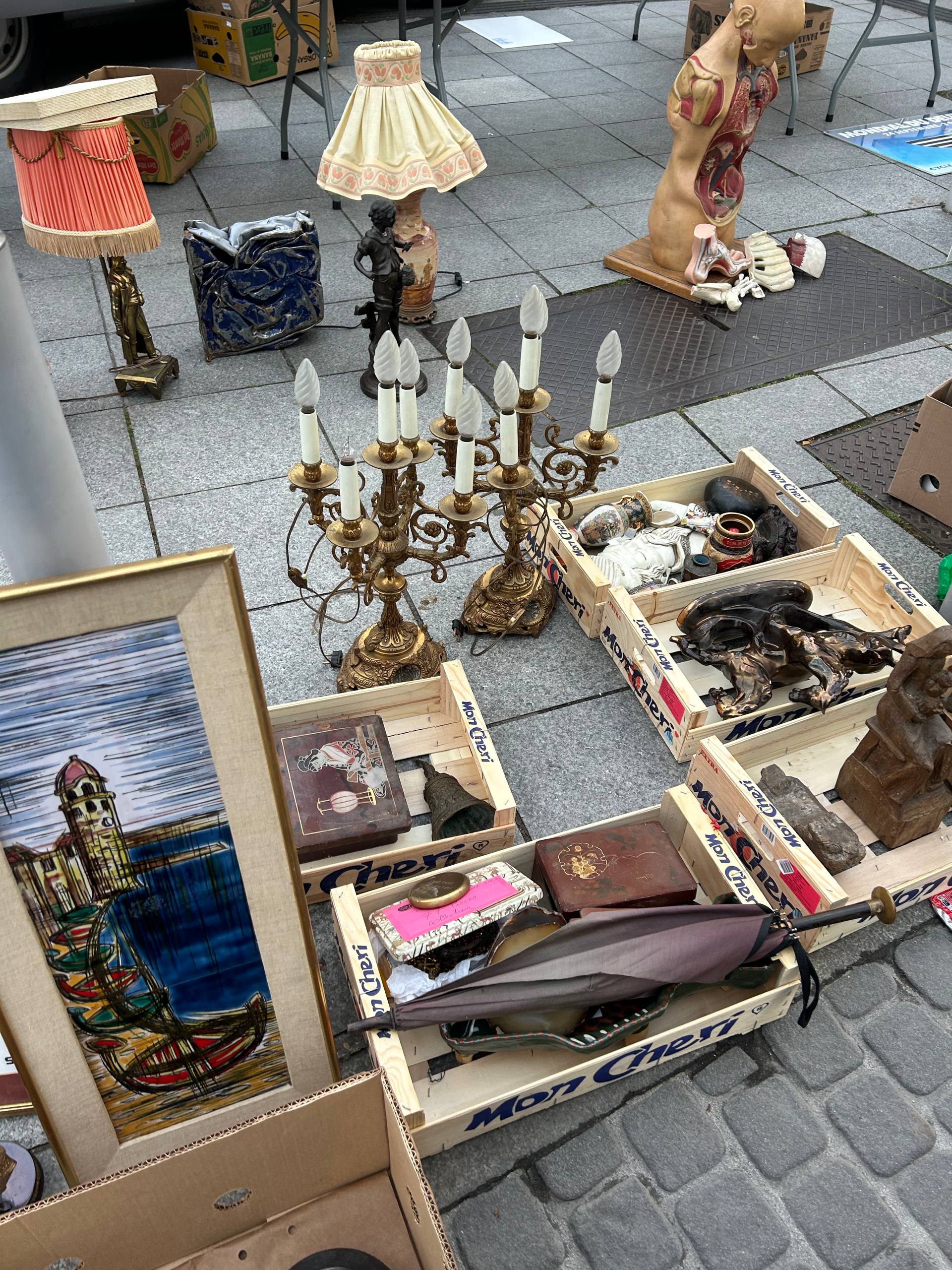
A brocante is a French flea market or antique fair where second-hand goods, antiques and vintage items are sold by a mix of professional dealers (brocanteurs) and private individuals (particuliers). The closest English equivalent is a flea market, but a typical brocante is more antique-heavy than a UK car boot sale and less new-stock-driven than a US flea market.
The word also refers to the trade itself (“la brocante” is the antiques-and-second-hand business in general) and to permanent antique shops on French high streets, often labelled simply “Brocante” on the front window.
This guide is for UK resellers planning a sourcing trip to France — once you know which type of event you’re looking at, the rest of the trip planning falls into place. We sell on eBay UK and Vinted, we’ve been on multiple France runs, and we built a verification database covering ~3,700 events across 8 northern and central French regions for our 2026 brocante calendar.
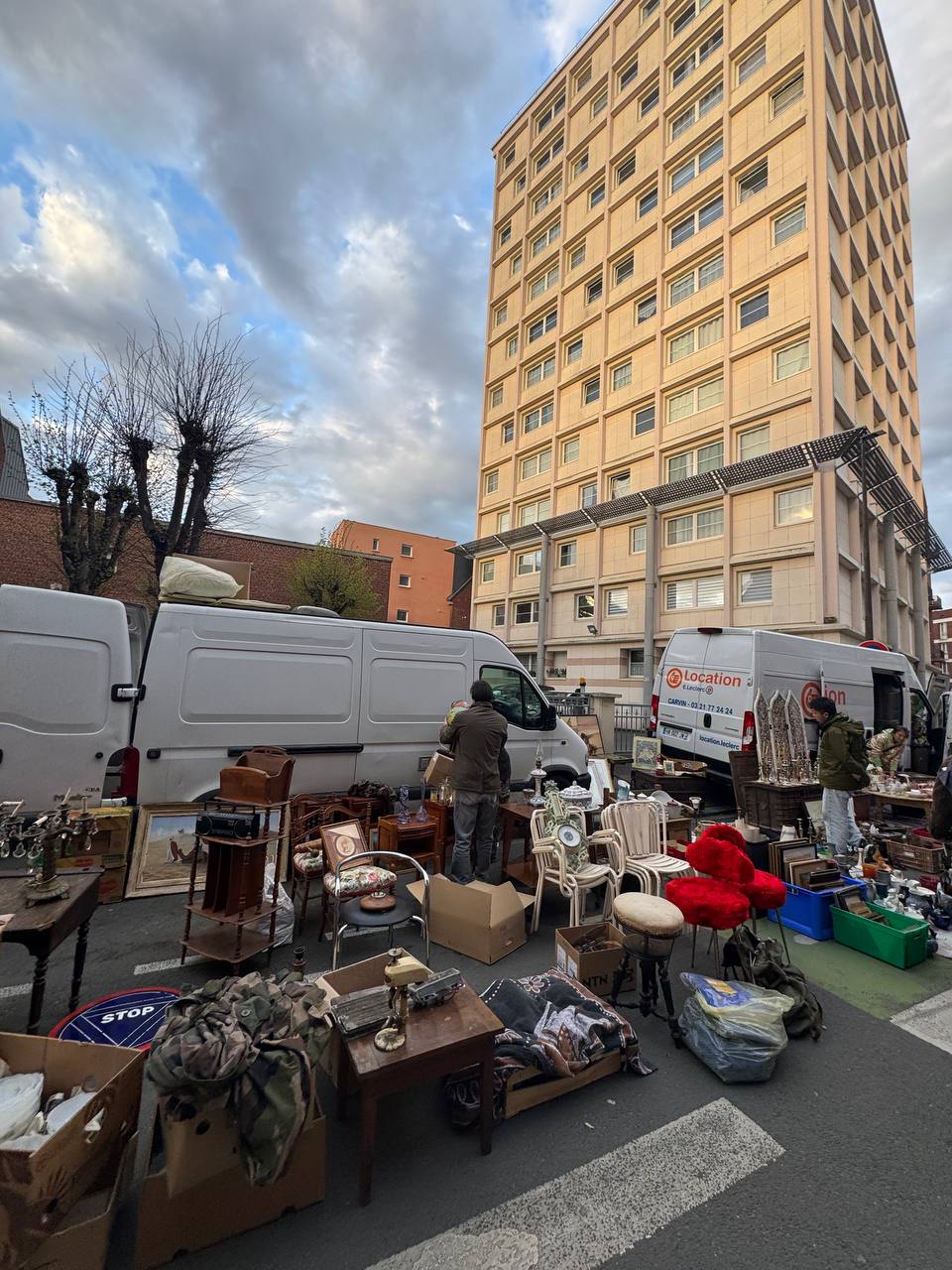
“The word ‘brocante’ is used loosely. It can mean a market, an event, a shop, or the whole trade. UK readers usually want a precise answer to ‘is this thing worth driving to?’ — and that depends on which type of event it actually is.” — Oleksandr Prudnikov, FlipperHelper developer and active reseller
French flea market types at a glance
Quick comparison — UK resellers can use this as a cheat-sheet when reading French listings:
| Type | Sellers | Typical prices | Best for |
|---|---|---|---|
| Brocante | Mixed pros + particuliers | Mid — dealer margin baked in | Curated antiques, decorative pieces |
| Vide-grenier | Particuliers only | Low — closest to UK car boot | Bargain hunting, household clearance |
| Vide-maison | Single household | Variable — one-off estate sale | House clearances, inherited stock |
| Braderie | Mixed; many particuliers-only | Low to mid | Volume + festival atmosphere (Lille, Wazemmes) |
| Réderie | Mixed (Picardy regional name) | Low to mid | Day-trip from Calais (Amiens) |
| Foire (à tout / aux antiquités) | Depends on suffix — check the title | Variable | Antique-grade if labelled aux antiquités |
| Salon des antiquaires | Vetted professionals only | High — dealer-trade | High-end antiques, calibration |
| Marché aux puces | Permanent professional dealers | Mid to high (negotiable) | Saint-Ouen, Vanves, Puces du Canal |
Detail and examples for each type below.
Brocante vs vide-grenier: what’s the difference?
The difference is who’s allowed to sell.
- Brocante — mixed professional dealers and private sellers. Antiques, decorative pieces, vintage items. Higher-quality stock on average; prices reflect dealer margins.
- Vide-grenier — literally “empty the attic”. Private sellers only. Household clearance: clothes, toys, books, kitchenware, the occasional inherited piece. Cheaper and more chaotic; you’re digging.
Many small French town events combine the two and are listed as “brocante et vide-grenier” — meaning both pros and particuliers are present. For a UK reseller, this is the best of both worlds: dealer-grade pieces sit next to attic-clearance prices.
Listings that say “réservée aux particuliers” (particuliers only, professionals not accepted) are vide-greniers in spirit even when they’re labelled brocante. The Braderie de Wazemmes in Lille is the famous example.
What is a braderie?
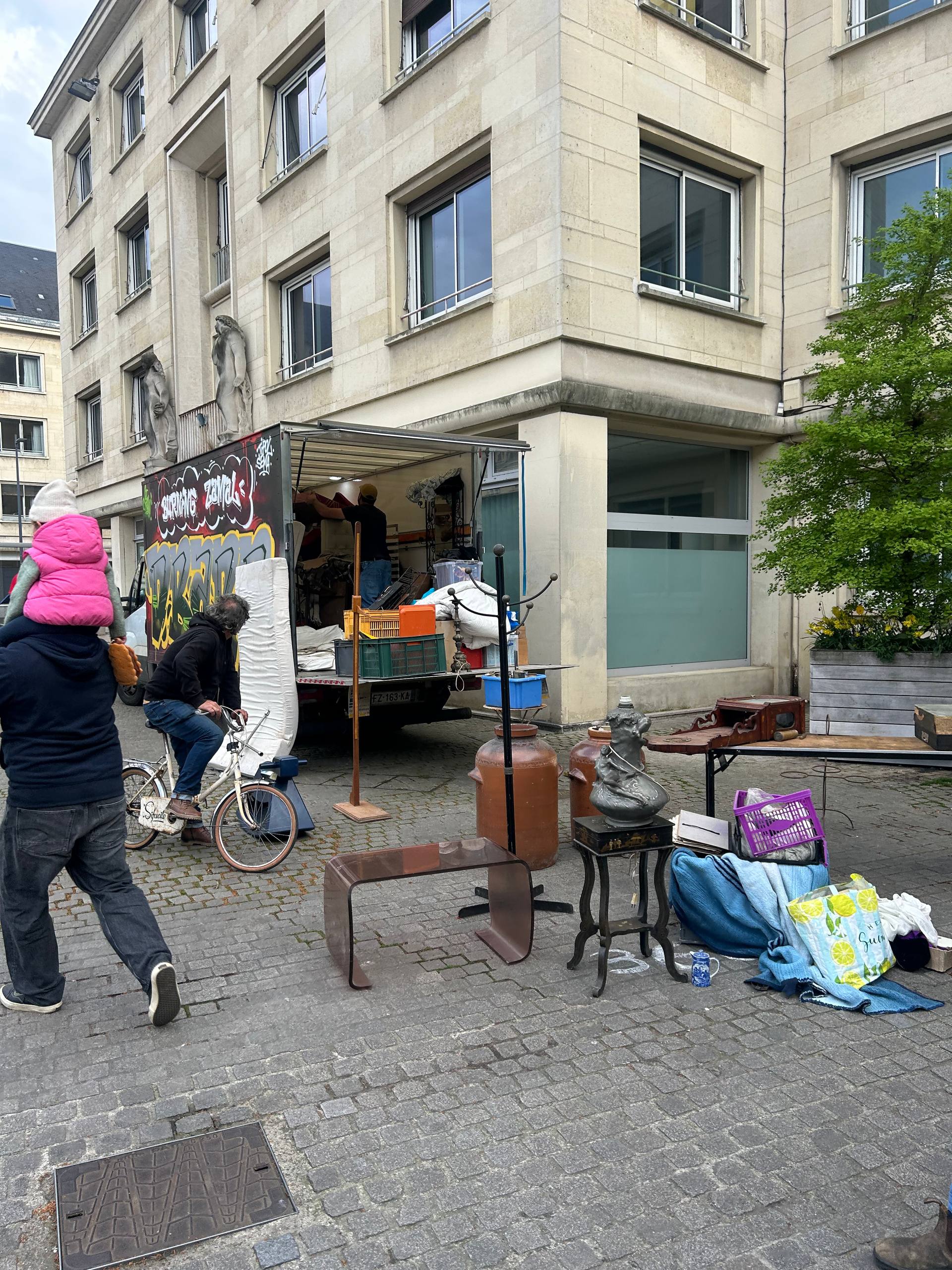
A braderie is a large-scale street sale that takes over a whole town or neighbourhood, mixing brocante stalls with shop discounts, food, music and crowds. It’s a brocante that became a public festival.
The Braderie de Lille is the canonical example — around 2–2.5 million visitors over a single weekend in early September, around 10,000 vendors, roughly 100 km of stalls. Confirmed for 5–6 September 2026 by the Ville de Lille. It’s the largest flea market in Europe.
Smaller braderies happen across France throughout the year. Many neighbourhood braderies are particuliers-only, which is why UK resellers like them: prices are closer to car-boot levels because dealers can’t set up.
What is a foire in France?
Foire literally means “fair”. It’s a broader category than brocante and the word alone tells you almost nothing — you have to read what comes after it.
- Foire aux antiquités — antique fair, professional dealers, your target
- Foire de la brocante — mixed brocante, also your target
- Foire à tout — literally “sell anything” fair, household-clearance scale, particuliers-heavy
- Foire aux greniers — same as foire à tout, regional naming
- Foire aux livres / aux disques / à la puériculture — specialist book / record / childcare-equipment fairs. Skip these unless you specialise in those categories
- Foire Saint-Romain (Rouen) — despite the name, it’s a fairground rides festival with food stalls. Not a brocante
- Foire au Jambon de Bayonne — ham fair. Not a brocante
The headline events here are the Foire de Chatou near Paris — ~330 antique dealers, twice a year, organised by the SNCAO antique-dealer syndicate (foiredechatou.com) — and the Foire Internationale de L’Isle-sur-la-Sorgue in Provence at Easter and 14–17 August. Both are top-tier dealer foires.
What is a salon des antiquaires?
A salon des antiquaires is a curated professional antique dealer salon, typically held indoors at an exhibition centre or town hall over a long weekend. Sellers are vetted, items are higher-end, and many salons carry the SNCAO-GA Authenticité-Qualité label — meaning the Syndicat National du Commerce de l’Antiquité, de l’Occasion et des Galeries d’Art has audited the event for dealer professionalism and item authenticity.
Examples in our 2026 calendar:
- Salon des Antiquaires de Besançon — 6–9 November 2026, 49th edition
- Salon des Antiquaires de Saint-Méloir-des-Ondes — 8–10 August 2026 (close to St Malo ferry)
These are the highest-quality stock environments on the calendar, but also the highest prices — treat them as trade-grade rather than bargain-hunting. Many UK resellers visit a salon early in a trip to calibrate prices, then drive on to brocantes for actual buying.
What is a réderie?
Réderie is a regional Picardy term — mostly used in Amiens and the surrounding Somme department — for a large neighbourhood-scale brocante.
The Grande Réderie d’Amiens is the famous one. Twice a year (typically April and October), around 2,000 exposants, 80,000 visitors per edition. It’s the easiest mega-event to day-trip from Calais — about 1h45 by car. Functionally it’s a braderie; it’s just called a réderie because Amiens.
What is a marché aux puces?
Marché aux puces literally translates to “flea market” and usually refers to a permanent or recurring market with fixed dealer stalls, as opposed to a one-off event. The most famous examples:
- Marché aux Puces de Saint-Ouen — on the edge of Paris, the world’s largest antiques market. 15 named indoor sub-markets across ~7 hectares. Open Saturday, Sunday and Monday year-round (official site). UK reseller guide here
- Puces de la Porte de Vanves — inside Paris (14e), Saturday and Sunday mornings, ~380 vendors. Smaller and friendlier than Saint-Ouen
- Puces du Canal (Lyon Villeurbanne) — second-largest in France, Thursday/Saturday/Sunday, year-round (pucesducanal.com)
The word puces alone (without “marché aux”) often refers to the same thing — e.g. Puces de Montsoreau, the monthly second-Sunday brocante in the Loire.
Particuliers vs professionnels — why this matters for resellers
Every French brocante listing tells you which type of seller is allowed. UK resellers should pay attention.
- Réservée aux particuliers — private individuals only, no professionals. Best for genuine bargains. Sellers are clearing personal goods, not running a business; they’ll take your first reasonable offer because they don’t want to take it home
- Mixte particuliers et professionnels — mixed. The default for most brocantes. Stock quality is higher because dealers cherry-pick, but prices reflect that
- Réservée aux professionnels — trade only. Salons des antiquaires and a few specialist events. Stock is dealer-grade, prices are dealer-trade. Dealers take cards. As a UK reseller you can buy here but the margin to UK retail is thinner
For a first sourcing trip from the UK, the highest-margin events are particuliers-only braderies and brocantes (Wazemmes in Lille, Sainte-Thérèse in Rennes, the Foire des Andaines in Bagnoles). For trade-grade stock once you know what sells, mixed brocantes and salons make sense.
How French brocante terminology shows up on aggregator sites
The three main French directories for brocante events are Brocabrac.fr, vide-greniers.org and toutes-les-brocantes.fr. They all use the same canonical event types, so once you know the words you can filter properly:
brocante— standard brocante (most common, about 13% of all listings)vide-grenier/vide-greniers— particuliers-only neighbourhood event (the largest single category)vide-maison— single-house clearance (a family clears their house, like a UK estate sale)foire-a-tout— sell-anything fairmarche-aux-puces/puces— flea market, usually permanentbraderie— town-wide street saleréderie— Picardy regional braderiebourse— collectors’ exchange (coins, stamps, vinyl, models — usually a single category)salon— salon des antiquaires (vetted dealers)foire— generic fair, read the title to see what it actually is
For our verified 2026 calendar across 8 French regions, see the Best French Brocantes 2026: UK Reseller Sourcing Calendar.
Frequently asked questions
Is a brocante the same as a flea market?
The closest English translation is yes, but the makeup is different. A typical UK or US flea market is dominated by traders selling new low-cost goods alongside second-hand items. A French brocante is overwhelmingly second-hand and antique, with much less new merchandise. UK resellers used to car boot sales will find brocantes feel similar in atmosphere but with a significantly higher proportion of vintage decorative pieces, glassware, kitchenalia and small furniture.
What is a brocante shop?
A brocante shop is a permanent second-hand and antique store, typically a single proprietor selling a curated mix of furniture, decorative arts, kitchenalia and vintage items. Many small French towns have one. They’re different from event-brocantes — they’re open all year, prices are tagged rather than negotiated, and you can come back another day if you want to think about a piece.
When are brocantes held in France?
Most brocantes happen on Sundays from May to September, with peaks around the May public holidays (1 May, 8 May, Ascension, Pentecost) and a second wave in September around the Braderie de Lille. November to March activity is much lower — mostly indoor salons des antiquaires and permanent puces markets like Saint-Ouen, Vanves and Puces du Canal in Lyon.
Who can sell at a French brocante?
Depends on the event. Particuliers (private individuals) can sell at any vide-grenier, foire à tout, or particuliers-only braderie — usually with a cap of two events per year per person under French law. Professionnels (registered antique dealers and brocanteurs) can sell at any brocante, salon des antiquaires, or pro-grade foire. As a UK reseller you’re a buyer, not a seller, and there’s no restriction on who can buy.
Can UK residents buy at French brocantes?
Yes — entry is free at most events, no registration needed. The practical considerations are getting there and back (Eurotunnel or Channel ferry), French driving requirements (Crit’Air sticker for cities like Lille and Paris, reflective vests, warning triangle), and UK customs declaration on the way back if you’re bringing goods home for resale. We cover all of that in our Sourcing Stock from France: UK Driving, Customs and Costs guide.
What’s the difference between brocante and antique?
In French, an “antiquité” legally requires the item to be over 100 years old, and a dealer specialising in antiquités is regulated. “Brocante” covers everything else — vintage, decorative, recently second-hand — with no age requirement. In practical UK terms, this maps roughly to “antiques shop” vs “junk shop / second-hand store”, but with much less stigma attached to the brocante side. Most events are mixed.
About the author
Oleksandr Prudnikov — UK-based reseller and developer of FlipperHelper, the app for tracking reselling inventory, costs and profit across eBay, Vinted and Facebook Marketplace.
Lives in Wandsworth, south-west London. Sells vintage and antique stock on eBay UK and Vinted alongside his wife Valentyna, who started the reselling side of the household. They’ve made multiple sourcing trips to northern France via Eurotunnel since 2024, and built FlipperHelper specifically to handle the multi-currency tracking those trips require (logging in EUR with auto-conversion, then reading off category totals at the UK customs declaration).
For this guide we cross-checked our verification database (~3,700 brocante events across 8 French regions, May–December 2026) against ten independent sources, including Brocabrac.fr, vide-greniers.org, the SNCAO antique-dealer syndicate, Ouest-France, OpenStreetMap, and Wikipedia FR — documented in our 2026 brocante calendar.
Related reading
- Best French Brocantes 2026: UK Reseller Sourcing Calendar — verified mega-events worth planning a UK trip around
- Sourcing Stock from France: UK Guide to Driving, Customs & Costs — how to actually get there and back
- Marché aux Puces de Saint-Ouen: UK Reseller Guide — the world’s biggest antiques market, sub-market by sub-market
- Vintage Market Reselling Guide — sourcing and selling vintage in the UK
Track your French brocante trips with FlipperHelper
Free app for iOS and Android with multi-currency support and automatic exchange rates. Log purchases in EUR at every brocante, track Eurotunnel and fuel as transport expenses, and read off category totals at the UK customs declaration. Works offline — useful when you’re on a French village square with no signal.
Download Free on the App StoreGet it Free on Google Play